
For a moment, I was convinced it was the end.
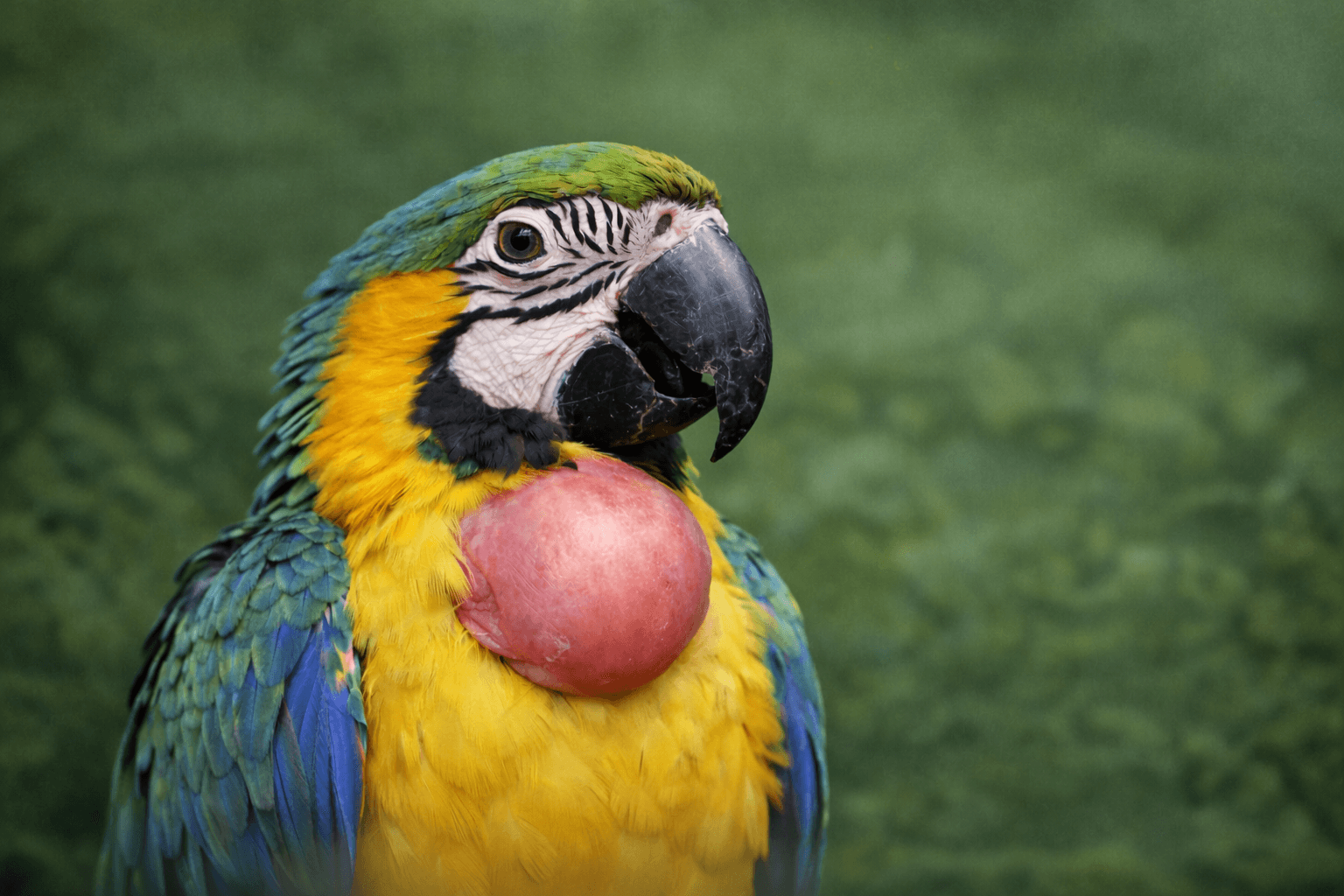
The crop was clearly enlarged, soft, and elastic — filled with air. The macaw was behaving differently than usual, and I had only one question in my mind: what went wrong?
This text was written because air in the crop of parrots does not always mean the same thing, and making the wrong assumption at the beginning can significantly delay proper action.
Here I describe one specific case of a macaw in which — something that does not happen often — a clear improvement was observed after just three days.
At first glance, many of these cases look identical.
An enlarged crop, abnormal elasticity, and a worried caretaker.
The problem is that the underlying causes can be very different:
mechanical
functional
infectious
And depending on which one is overlooked, the course of the problem may differ significantly.
In this case, the crop:
was clearly enlarged,
was soft and elastic on palpation,
contained neither food nor liquid — only air.
The symptom persisted over time, despite regular feeding schedules and proper husbandry conditions.
Additionally:
vomiting occurred intermittently,
it was not violent, but recurrent.
This was the first sign that the problem might not be purely mechanical.
The macaw:
was eating,
was not in an acute condition,
but was clearly less comfortable than usual.
I observed:
decreased activity,
occasional restlessness,
no sudden deterioration, but also no spontaneous improvement.
Key observations:
no food retention in the crop
no signs of obstruction
persistent presence of air
recurrent vomiting
It was the vomiting that could not be ignored.
Most often, we fear the worst: rupture, obstruction, severe infection.
In reality, it may be:
food retention
infection (bacteria / yeast)
simple functional disturbance after stress
After consultation, the decision was made to initiate:
antibiotic therapy administered via drinking water.
No other changes were introduced at the same time — intentionally — to allow a clear assessment of the bird’s response.
During observation, attention was paid to:
crop size and tension,
the bird’s behavior,
activity level,
water intake,
recurrent vomiting.
What WAS present | What was NOT present |
Air in the crop | Food retention |
Soft, elastic consistency | Hard mass / blocked crop |
Recurrent vomiting | Violent vomiting / food regurgitation |
Decreased activity, restlessness | Complete apathy / loss of appetite |
No sudden deterioration | Acute inflammation / shock |
Elastic, “balloon-like” crop | Enlarged but hard and tense crop |
After approximately two days:
the amount of air in the crop began to decrease.
By the third day:
the crop returned to normal size,
its consistency was physiological,
vomiting stopped,
the macaw appeared noticeably calmer,
activity returned to normal.
The improvement was stable and continued in the following days.
The course of this case suggests that:
the cause may have been an infectious factor,
interfering with normal crop function,
rather than a strictly mechanical problem.
However — and this is very important —
👉 this is the description of a single case.
Similar symptoms:
may have different causes,
may require a completely different approach,
may not respond in the same way or at the same speed.
This text:
is for informational and educational purposes only,
describes a specific observation from practice,
does not constitute veterinary advice.
Every crop-related problem in birds:
should be evaluated individually,
and any decisions regarding treatment — including the use of antibiotics —
should always be made in consultation with a veterinarian, preferably one experienced in exotic bird medicine.












Comments