
Scaly Leg Mites in Birds – Another Real Case from Breeding Practice
1. Why this text was written
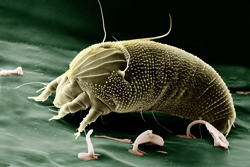
At first glance, it looks like a friendly little alien from a science-fiction movie. Unfortunately, this is only an illusion – this microscopic passenger can be truly dangerous.
Scaly leg mite infestation, which is the subject of this article, is a condition often associated with neglect and poor husbandry. In practice, however, even in well-maintained and carefully managed breeding facilities, an unwanted guest can appear. Below, I describe another real case that I encountered personally. This case highlights how important quick recognition and calm, sensible action are.
2. What scaly leg mites are
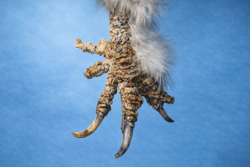
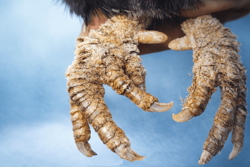
Scaly leg mites in birds are caused by microscopic mites of the genus Cnemidocoptes. These parasites live in the living skin tissue of the host, burrowing small tunnels within the epidermis. They are most commonly observed in parrots and budgerigars around the beak, nostrils, and cere, as well as in pheasants and poultry, primarily on the legs and toes.
3. Why scaly leg mites are a serious problem
Scaly leg mite infestation is not merely a cosmetic issue. In addition to causing significant discomfort, itching, and pain, it leads to substantial skin changes. As the bird’s body defends itself against the parasite, excessive thickening of the keratinized skin layers occurs. Characteristic lesions develop, which may impair movement and promote secondary bacterial and fungal infections. In severe, untreated cases, damage to – or even loss of – toes or parts of the limbs may occur.
4. How scaly leg mites function
Mites of the genus Cnemidocoptes breathe through microscopic tunnels they create in the epidermis. Mechanical blockage of these tunnels cuts off the oxygen supply, leading to the gradual death of the parasite.
5. Case description
In the case described, scaly leg mites were observed in a single pheasant within the breeding facility. The lesions were localized and not advanced. After consultation with a veterinarian, it was recommended to apply petroleum jelly to the affected areas and to use a topical preparation containing permethrin. Additionally, vitamin A supplementation was introduced to support skin regeneration. As the case was not severe, this approach proved to be effective.
6. Treatment and management
In more advanced cases, treatment must be repeated and carried out under veterinary supervision. This condition spreads easily between birds; therefore, isolation of the affected individual and the use of protective gloves during handling are strongly recommended.
7. Conclusions
Scaly leg mites can appear even in well-managed breeding facilities and are not always the result of neglect. Early recognition of lesions and consultation with a veterinarian are crucial. I wish all breeders good health in their flocks and as few unwanted guests as possible.
8. Disclaimer
The case described is for informational purposes only and is based on real experience. Each medical case may progress differently; therefore, any treatment decisions should always be consulted with a veterinarian.












Comments